
Years of conflict damaged critical infrastructure and disrupted access to essential services across Syria. Now, as displaced families return to communities, strained systems face growing demand for water, electricity, healthcare, and other resources that daily life and businesses rely on.
Restoring and expanding access to these services is essential to meeting the needs of both returning families and those already living in communities. Blumont is working with government authorities, local institutions, and communities across Syria to address these challenges—not only by rehabilitating infrastructure, but also by strengthening local systems and providing the support families need to rebuild their lives and livelihoods.
For approximately 28,000 people in western rural Deir ez-Zor, one priority is reliable access to clean water. Residents relied on water stations to pump, filter, and disinfect water for drinking, but the three local stations were not operating. Even before they went out of service, they were only operating at 60-70% of their intended capacity. Restoring operations wouldrequire extensive repairs, a process that typically takes 30 days or more.
Working alongside the Deir ez-Zor Water Directorate, Blumont rehabilitated the three water stations, restoring water pumping after just 18 days and completing all work 37 days ahead of schedule.
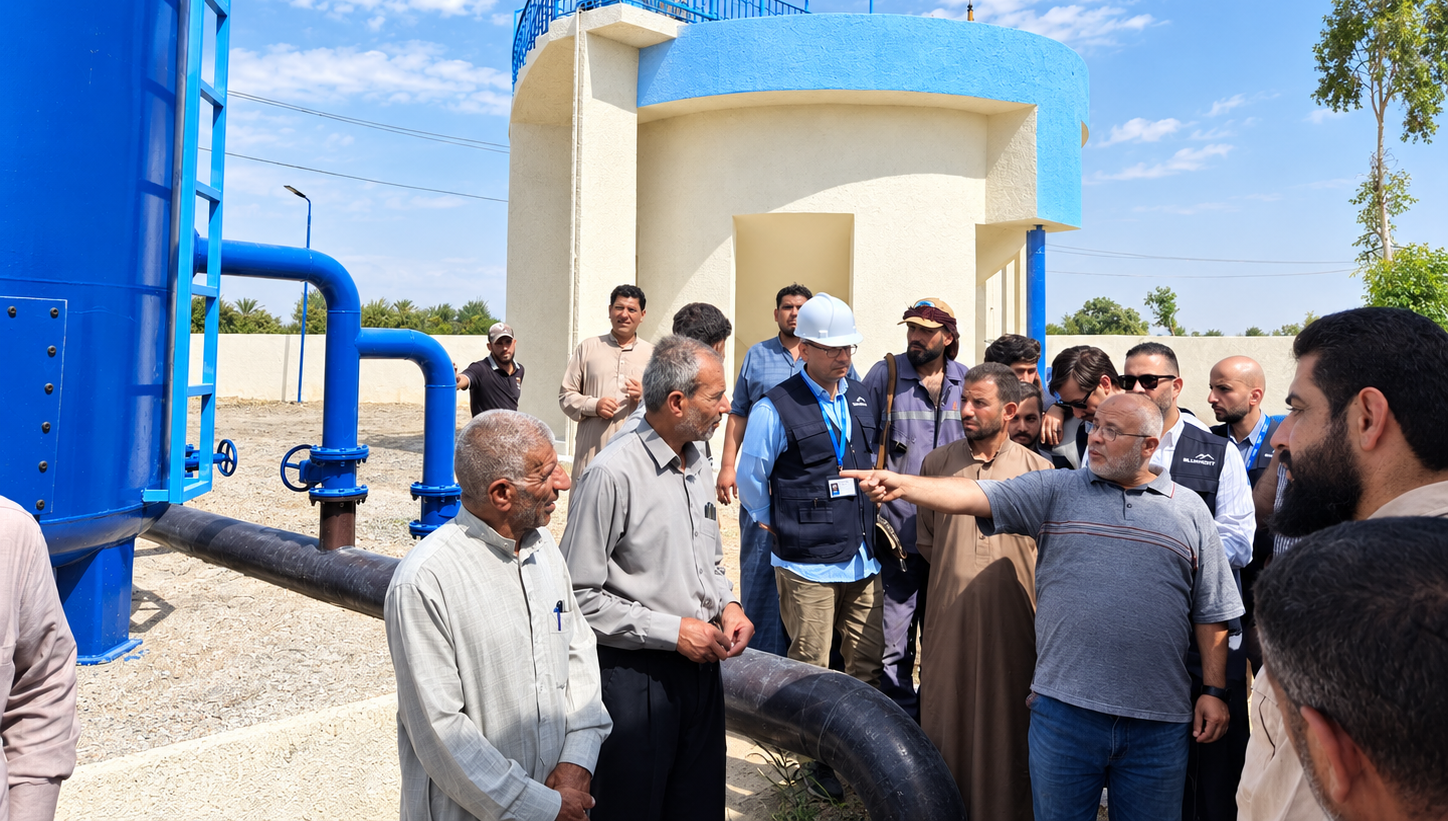
Local officials tour one of the rehabilitated water stations in Deir ez-Zor.
Local Priorities, Targeted Action
When work began, the initial plan was to rehabilitate a single water station. Through consultations with officials and technical leaders from the Ministry of Energy, the Water Directorate, UNICEF, and other stakeholders, Blumont identified the opportunity to rehabilitate the three stations in tandem. The shift would reach more people while responding to local needs and supporting Syria’s broader recovery priorities.
With plans adapted, the challenge shifted to implementation, while also minimizing community disruption.
The stations required extensive repairs to pumping, filtration, electrical, and water treatment systems. When recent flooding further reduced the efficiency of filters at one station, the team incorporated additional maintenance without delaying completion.
The rehabilitation was designed not only to repair equipment but also to support continued operation. Blumont provided spare parts, maintenance and safety equipment, and approximately six months of water treatment chemicals and operating supplies to help local teams sustain the improvements.
A Coordinated Approach to Recovery
The three water stations were officially reopened recently at a ceremony with Water Directorate leadership and other government officials.
“The Water Company along with Blumont did a lot of work in these stations such as: construction works, filters preparation, replacing filter elements, installing mechanical and electrical equipment,” Eng. Ahmad Mousa, General Manager of the Water Company in Deir ez-Zour said. “Safe and clean water is being delivered now to people in this region.”
Blumont’s team is also working with local officials to rehabilitate critical community infrastructure in Ar-Raqqa and in Al-Hasakeh City and the Shadadah sub-district of Al-Hasakeh Governorate. The rehabilitation is one part of Blumont’s broader efforts to support Syria’s recovery. Alongside infrastructure improvements, teams are working with government authorities and local institutions to strengthen case management and protection services, provide psychosocial support, and bring communities together to address shared challenges.
By connecting improvements in essential services with support for families, communities, and local institutions, Blumont is working alongside Syrian authorities to advance recovery priorities and help build the foundation for long-term stability.
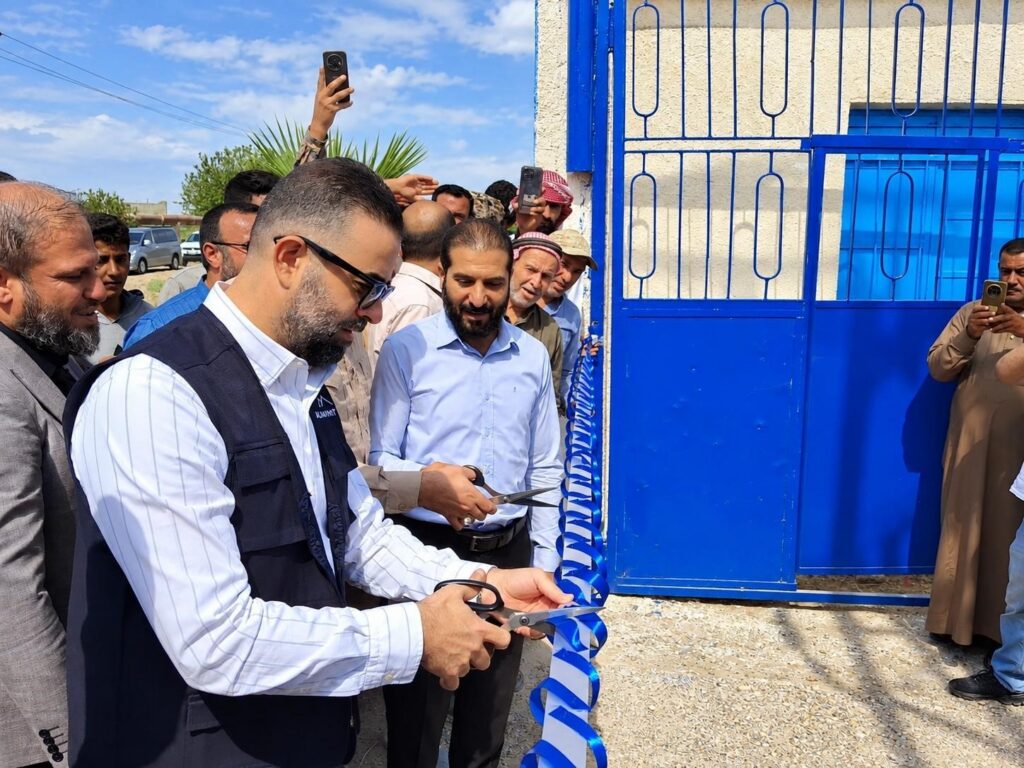
Blumont joined local officials to mark the opening of the restored water stations.


